

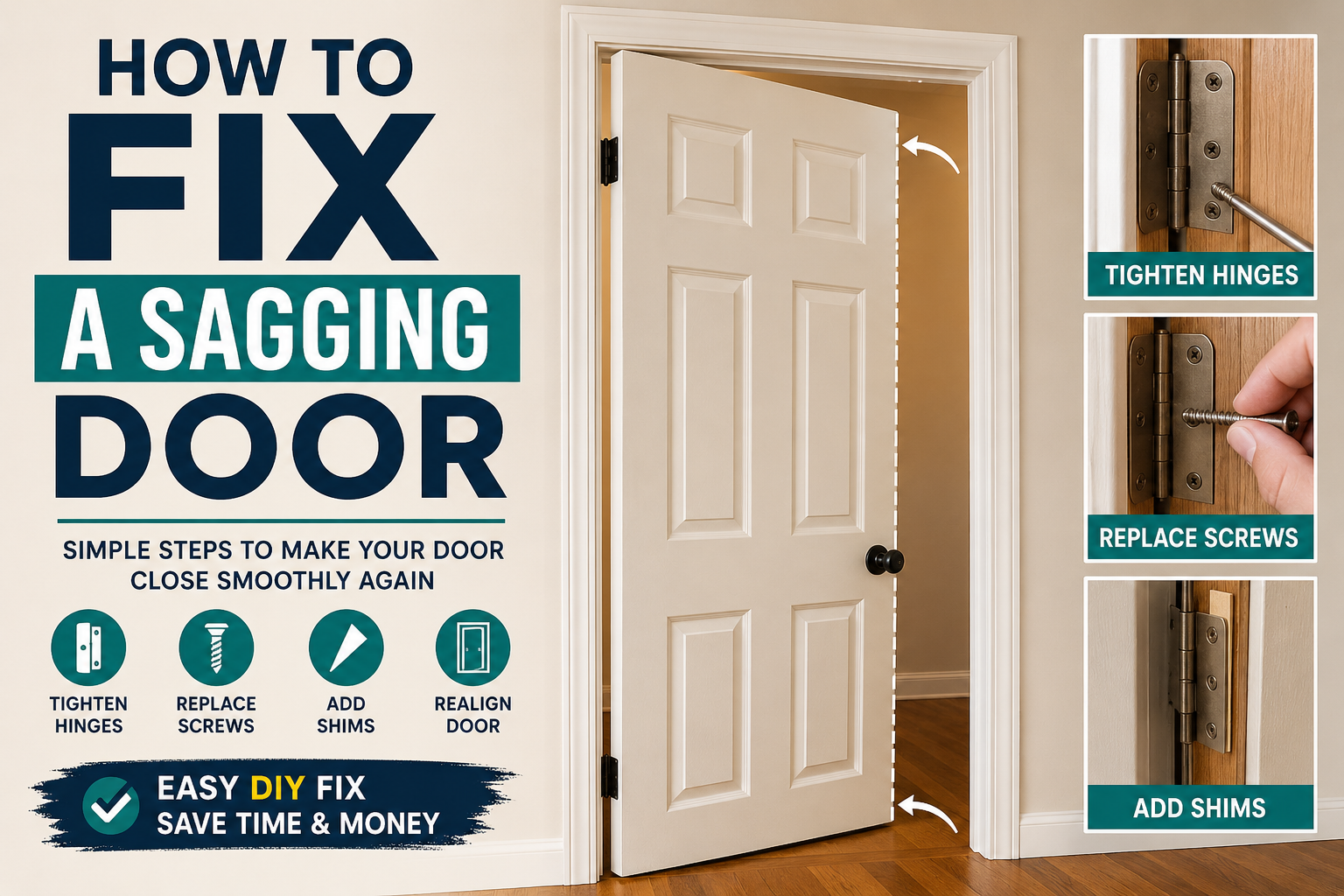
A sagging door can be annoying every single day. It scrapes the floor, sticks at the top, leaves uneven gaps, or refuses to latch properly.
The good news is that learning how to fix a sagging door is usually easier than most people think. In many cases, you do not need to replace the whole door. You just need to adjust the hinges, tighten the screws, or correct the alignment.
Think of a sagging door like a picture frame hanging slightly crooked. The frame may still be fine, but one small support point has shifted. Once you fix that support, everything looks and works better again.
This guide explains how to fix a sagging door in a simple, step-by-step way, using basic tools and practical methods that work for most interior and exterior doors.
What Is a Sagging Door?
A sagging door is a door that has dropped out of its proper position. Instead of sitting square inside the frame, one side hangs lower than it should.
You may notice the top corner rubbing against the frame, the bottom dragging on the floor, or the latch missing the strike plate. These are all common signs of sagging.
Most sagging happens on the latch side of the door. The hinge side stays attached, but the opposite side starts dipping down because the hinges, screws, or frame are no longer holding the door firmly.
Before you learn how to fix a sagging door, it helps to understand what is causing the problem. That way, you can fix the real issue instead of only treating the symptom.
Common Signs Your Door Is Sagging
A sagging door is usually easy to spot once you know what to look for. The door may still open and close, but it will not feel smooth.
Here are the most common signs:
- The door scrapes the floor when opening or closing
- The door sticks near the top corner
- The latch does not line up with the strike plate
- There is a wider gap at the top on one side
- The door closes only when pushed hard
- The hinges look loose or slightly pulled away
- The door rubs against the frame
If your door has one or more of these issues, you are likely dealing with sagging. The sooner you fix it, the easier the repair usually is.
As many repair professionals say, “A door rarely fails all at once; it usually gives small warning signs before it becomes a bigger problem.”
Why Doors Start Sagging
Doors sag for several reasons. The most common cause is loose hinge screws. Over time, repeated opening and closing can pull screws out of the wood.
Heavy doors are more likely to sag, especially solid wood doors or exterior doors. Their weight puts constant pressure on the hinges.
Humidity can also play a role. Wood expands and contracts with moisture, which may cause the door or frame to shift slightly.
Sometimes the issue is not the door at all. The frame may be out of square, the house may have settled, or the hinge mortises may be too deep.
Understanding the cause makes how to fix a sagging door much more straightforward. You can start with the easiest fixes and move to stronger repairs only if needed.
Tools You May Need
You do not need expensive tools for most sagging door repairs. Many fixes can be done with items already found in a basic home toolbox.
Useful tools include:
- Screwdriver or drill
- Long wood screws
- Toothpicks or wooden matchsticks
- Wood glue
- Utility knife
- Hammer
- Chisel
- Sandpaper
- Level
- Cardboard or hinge shims
- Pencil
For many doors, a screwdriver and a few longer screws are enough. Start simple before moving to cutting, sanding, or reshaping the door.
Step 1: Check the Door Gap First
Before removing anything, close the door and look at the gaps around it. This gives you clues about where the sag is happening.
Look at the top, bottom, hinge side, and latch side. A properly aligned door should have fairly even gaps on all sides.
If the gap is tight at the top latch-side corner and wide at the top hinge side, the door is likely sagging downward. If the bottom scrapes the floor, the sag may be more severe.
This quick check helps you avoid guessing. When learning how to fix a sagging door, the first rule is simple: look before you adjust.
Step 2: Tighten the Hinge Screws
Loose hinge screws are the most common reason for a sagging door. Start by opening the door and checking each hinge.
Use a screwdriver or drill to tighten all hinge screws. Pay close attention to the top hinge because it carries much of the door’s weight.
If the screws turn without getting tight, the holes are stripped. That means the screw has lost its grip inside the wood.
In many cases, tightening the hinge screws will lift the door back into place. Test the door after this step before doing anything else.
This is often the fastest answer to how to fix a sagging door without removing the door or making major changes.
Step 3: Replace Short Screws with Longer Screws
If tightening does not work, replace one or two hinge screws with longer screws. This is especially useful on the top hinge.
Most door hinges come with short screws that only bite into the door jamb. Longer screws reach deeper into the wall framing behind the jamb.
Use a 2.5-inch or 3-inch wood screw in the top hinge. Drive it carefully so it pulls the hinge tighter against the frame.
Do not overtighten the screw. If you drive it too hard, you may pull the door too far out of alignment.
This method works well because it gives the hinge stronger support. “A longer screw does not just hold the hinge; it reaches the structure behind the frame and gives the door a better anchor.”
Step 4: Fix Stripped Screw Holes
If the hinge screws keep spinning, the screw holes are stripped. This means the wood fibers inside the hole are worn out.
A simple fix is to fill the hole with toothpicks or wooden matchsticks and wood glue. Push them into the hole, break off the extra, and let the glue dry.
Once dry, drive the screw back into the repaired hole. The new wood gives the screw something solid to grip.
This small repair can make a big difference. It is one of the most useful tricks when learning how to fix a sagging door with loose hinges.
For a stronger repair, you can use wooden dowels instead of toothpicks. This is better for heavy doors or badly damaged screw holes.
Step 5: Check the Top Hinge
The top hinge is usually the main problem area. Since the door hangs from the hinge side, the top hinge takes a lot of stress.
Open the door and look closely at the top hinge. Check if it is loose, bent, or pulling away from the frame.
If the hinge leaf is not sitting flat, tighten it or remove it and inspect the screw holes. Repair any stripped holes before reinstalling the hinge.
Sometimes the hinge itself is bent. If it looks warped or damaged, replace it with a new hinge of the same size.
A sagging door often needs only one strong repair at the top hinge to work properly again.
Step 6: Shim the Bottom Hinge If Needed
If the door still sags after tightening the top hinge, you may need to adjust the hinge position. One simple method is shimming.
A shim is a thin piece of material placed behind the hinge to slightly change the door angle. Cardboard, thin plastic, or hinge shims can work.
To lift the latch side of the door, place a thin shim behind the bottom hinge. This pushes the bottom hinge side out slightly and raises the opposite top corner.
Remove the hinge screws, place the shim behind the hinge leaf, and reinstall the screws. Then test the door.
Small changes matter here. Use one thin shim first, then add another only if needed.
Step 7: Adjust the Strike Plate
Sometimes the door is not sagging badly, but the latch no longer lines up with the strike plate. The strike plate is the metal plate on the door frame where the latch enters.
Close the door slowly and watch where the latch touches. If it hits too high or too low, the strike plate may need adjusting.
You can loosen the strike plate screws and move the plate slightly. If more movement is needed, you may need to enlarge the opening carefully with a file or chisel.
This does not always fix the sag itself, but it can help the door close properly after minor movement.
When people ask how to fix a sagging door, they often focus only on the hinges. But the latch area also matters because it affects how the door feels when closing.
Step 8: Check If the Door Is Rubbing
If the door still rubs after hinge repairs, find exactly where it touches. Look for shiny marks, scratches, or paint wear.
Common rubbing points include the top corner, latch side, and bottom edge. Mark the rubbing area lightly with a pencil.
If the rubbing is minor, sanding may be enough. Use sandpaper to remove a small amount of material from the tight spot.
Do not sand too much at once. Remove a little, test the door, and repeat if needed.
A door should close smoothly, not forcefully. “A good door repair is not about making the door obey; it is about helping it move the way it was meant to.”
Step 9: Plane the Door Only When Necessary
Planing means shaving a thin layer of wood from the door edge. This should be a last resort after hinge repairs and alignment checks.
If the door has swollen from humidity or the frame is slightly uneven, planing may help. But if the real problem is loose hinges, planing will not solve it.
Remove the door if needed and plane only the area that rubs. Take off small amounts at a time.
After planing, sand the edge smooth and repaint or seal the exposed wood. This helps prevent moisture from getting into the door.
Use this method carefully. Once wood is removed, you cannot put it back.
Step 10: Inspect the Door Frame
If none of the simple fixes work, the door frame may be the problem. Frames can shift because of settling, moisture, poor installation, or age.
Use a level to check the sides of the frame. Look for uneven gaps, cracks, or areas where the frame has pulled away from the wall.
If the frame is badly out of square, hinge adjustments may only offer a temporary fix. You may need to repair or reset part of the frame.
For older homes, slight movement is normal. But if the door suddenly starts sagging or the frame looks cracked, the issue may need closer attention.
A door is only as strong as the frame holding it. That is why how to fix a sagging door sometimes means fixing the support around it, not just the door itself.
How to Fix a Sagging Interior Door
Interior doors are usually lighter than exterior doors, so they are often easier to repair. Most problems come from loose hinges or stripped screws.
Start by tightening all hinge screws. Then replace one top hinge screw with a longer screw if needed.
If the screw holes are stripped, repair them with wood glue and toothpicks. This usually restores the hinge grip.
Interior doors may also sag if children hang on the handle or if the door is used heavily every day. Regular tightening can prevent the problem from returning.
For most interior doors, you can fix sagging in less than an hour with basic tools.
How to Fix a Sagging Exterior Door
Exterior doors are heavier and more exposed to weather. They may sag because of weight, moisture, or frame movement.
Start with the hinges, just like with an interior door. Use long screws in the top hinge to anchor the door firmly into the wall framing.
Check the weatherstripping too. Sometimes it makes the door feel stuck even when the door is not badly sagging.
Look for swelling along the door edges, especially after rain or humid weather. If the door has absorbed moisture, it may need sanding, sealing, or repainting.
Exterior doors protect your home, so alignment matters. A sagging exterior door can cause drafts, security issues, and trouble locking.
How to Prevent a Door from Sagging Again
After you fix the door, a few simple habits can help keep it aligned. Doors last longer when their hinges and frames stay tight.
Check hinge screws every few months, especially on heavy doors. Tighten any loose screws before they get worse.
Avoid hanging heavy items on door handles. Bags, robes, and storage hooks can slowly pull the door out of alignment.
Keep wooden doors sealed with paint or finish. Unsealed wood can absorb moisture and swell.
If the door is very heavy, consider using stronger hinges or adding a third hinge for better support.
Prevention is simple: protect the hinges, control moisture, and fix small issues early.
Mistakes to Avoid When Fixing a Sagging Door
One common mistake is sanding or planing the door before checking the hinges. This can remove wood unnecessarily.
Another mistake is using the same short screws again after the holes are already stripped. The screws may feel tight for a moment, then loosen again.
Do not force the door closed every day. This can damage the frame, latch, hinges, and flooring.
Avoid making large adjustments too quickly. Door alignment is sensitive, and small changes can have a big effect.
The best approach is slow and steady. Fix the hinge support first, test the door, then move to the next step only if needed.
When Should You Call a Professional?
You can handle many sagging door problems yourself. But some situations need professional help.
Call a professional if the frame is cracked, the wall has shifted, or the door is extremely heavy. You should also get help if the door is part of a security entry system.
If the door suddenly becomes badly misaligned, there may be a deeper structural issue. This is especially true if windows, floors, or nearby doors are also shifting.
A professional can check whether the problem is only the door or part of a larger frame or foundation concern.
For normal hinge sag, a DIY fix is usually enough. For major frame movement, expert help is safer.
Quick Recap: The Best Way to Fix a Sagging Door
The simplest way to fix a sagging door is to start with the hinges. Tighten the screws, replace weak screws with longer ones, and repair stripped holes.
If the door still sags, adjust the hinges with shims. Then check the latch, strike plate, and rubbing points.
Only sand or plane the door after you are sure the hinges and frame are properly aligned.
Here is the simple order:
- Check the gaps
- Tighten hinge screws
- Add longer screws
- Repair stripped holes
- Shim hinges if needed
- Adjust the strike plate
- Sand or plane only when necessary
This step-by-step method makes how to fix a sagging door easier, safer, and more effective.
Final Thoughts
A sagging door may seem like a small problem, but it can quickly become frustrating. It can scratch floors, damage frames, and make your home feel less comfortable.
The good news is that most sagging doors do not need replacement. With a few basic tools and careful adjustments, you can often make the door work smoothly again.
If you remember one thing, remember this: start with the hinges. They are the support system of the door, and they are usually where the problem begins.
Now that you know how to fix a sagging door, you can handle the issue with confidence and avoid bigger repairs later.
“A door that closes smoothly is one of those small home fixes you feel every single day.”
