

Introduction
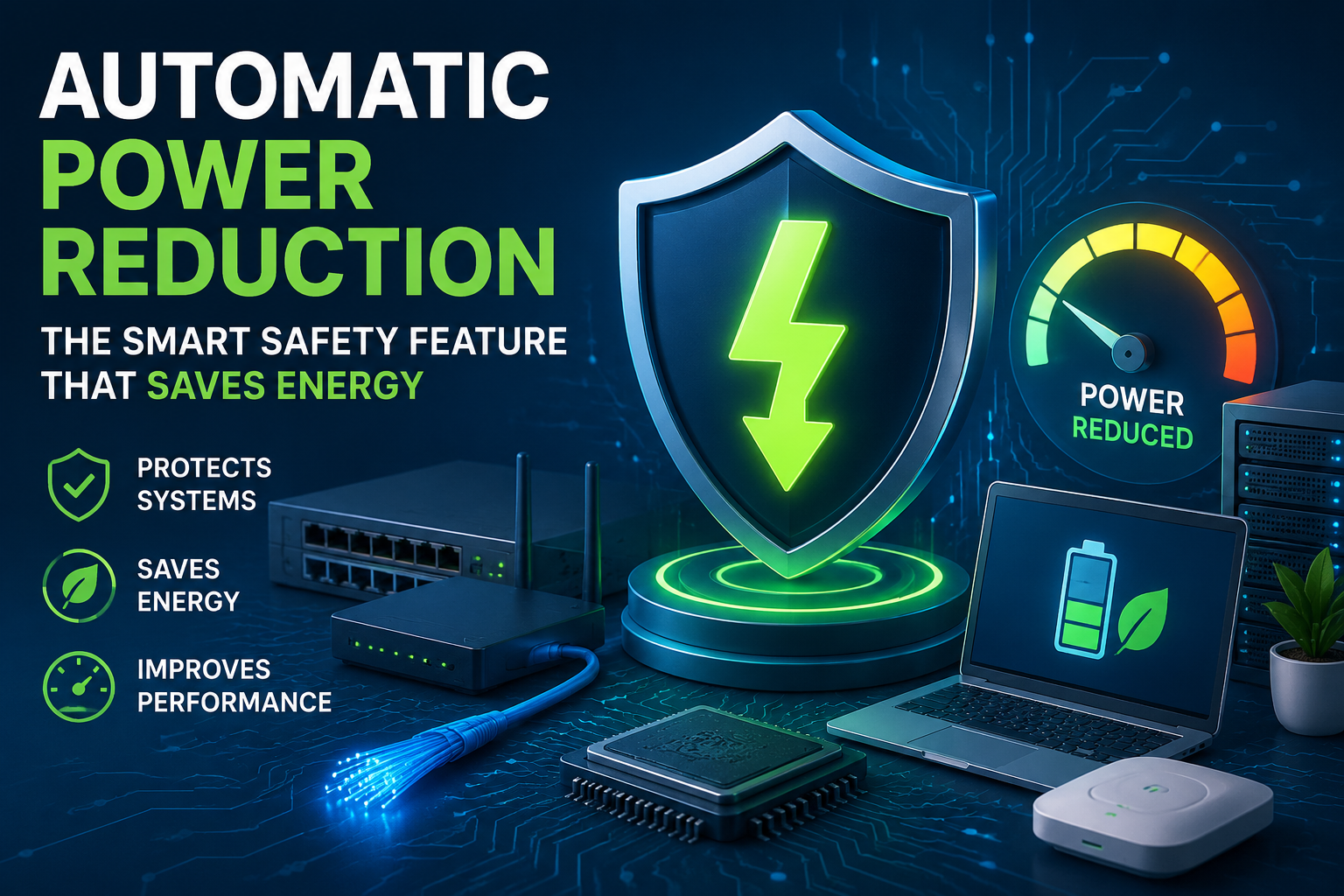
Have you ever noticed your phone dimming when the battery runs low or your laptop slowing down to prevent overheating? These small actions are driven by a smart system called automatic power reduction, which is also used in larger systems like networks, fiber cables, and digital devices to ensure safety, efficiency, and energy savings. In 2026, as energy efficiency becomes a top priority, automatic power reduction plays a crucial role in optimizing system performance, reducing operational costs, and improving safety. In this article, we’ll explore how it works, why it’s essential, and how it can be implemented in various technologies.
What Is Automatic Power Reduction?
Automatic power reduction is a smart feature integrated into systems that automatically lowers power when it detects problems or when full power isn’t necessary. Think of it like a car slowing down when the road becomes unsafe. The car doesn’t stop completely, but it reduces speed to stay safe. Similarly, automatic power reduction lowers the power in a system when it notices an unusual situation or when there’s low activity.
This feature is used in many modern systems, including optical networks, wireless devices, routers, switches, digital chips, and even everyday devices like smartphones and laptops. Its goal is simple: it helps save energy, protect devices, and reduce safety risks.
Why Automatic Power Reduction Matters
Safety
In systems that use high energy, automatic power reduction is crucial for safety. When a system runs at high power all the time, it can generate excessive heat, which can damage components, slow down performance, and shorten the device’s lifespan. For example, in optical systems, lasers used for fiber optic networks can be dangerous if not controlled properly. If a fiber cable breaks or a connector is damaged, automatic power reduction can quickly lower the laser’s power to avoid injury to technicians and prevent further damage.
Energy Savings
Another important reason for automatic power reduction is energy savings. In 2026, reducing energy consumption is a key concern for businesses and individuals alike. By lowering power during low activity or when full performance is not required, automatic power reduction helps reduce electricity usage and lower operational costs. Whether in data centers or wireless networks, every bit of energy saved can make a significant impact on overall efficiency and cost savings.
Performance Optimization
Too much power usage can also interfere with performance. For instance, in wireless networks, excessive signal strength can lead to interference and poor connections. By adjusting power levels dynamically, automatic power reduction optimizes performance by reducing interference and ensuring that the system works efficiently.
How Automatic Power Reduction Works
Automatic power reduction works as a continuous, real-time monitoring system within a device. Sensors in the system keep an eye on power levels, heat, signal strength, and other system parameters. When the system detects an unusual condition, like a weak signal, a broken cable, or an increase in heat, it reacts instantly by reducing power to a safer, more manageable level.
This process often occurs within milliseconds, ensuring that potential damage is avoided quickly. After lowering the power, the system tests whether the problem has been fixed, and if everything is normal again, it gradually restores the power back to its standard level. This cycle helps maintain system stability and prevent overuse of energy when it’s unnecessary.
Automatic Power Reduction in Optical Networks
In optical networks, where fiber cables and lasers are used to send data over long distances, automatic power reduction is essential. Lasers in optical systems can be powerful and sometimes dangerous. If the fiber cable breaks or a connector opens, the laser light may escape, posing a safety risk. Automatic power reduction quickly reduces the laser’s power when a fault is detected, ensuring that technicians are not exposed to harmful light.
Besides safety, reducing power in these systems also helps protect the equipment itself. High power levels can damage connectors and amplifiers, leading to costly repairs. By reducing power when necessary, optical systems remain safe and functional without significant maintenance costs.
Automatic Power Reduction for Safety
The primary role of automatic power reduction is to keep systems safe, especially when dealing with high-energy components like lasers and electrical circuits. In optical systems, the invisibility of laser light makes it even more dangerous. Automatic power reduction ensures that the power is lowered automatically whenever a fault is detected, thereby protecting workers and equipment during repairs or maintenance.
This technology also helps prevent overheating and potential damage to sensitive parts of the hardware. Whether in data centers or home routers, it helps avoid long-term wear and tear on components, prolonging their lifespan and improving overall system reliability.
Automatic Power Reduction in Wireless Systems
Wireless systems, such as Wi-Fi routers and access points, also benefit from automatic power reduction. In crowded areas with many connected devices, power reduction helps prevent signal interference and improves network stability. By adjusting the power level based on nearby devices and environmental conditions, wireless systems reduce unnecessary interference and maintain smooth connections.
For example, in office buildings or public spaces, automatic power reduction can lower signal strength in areas with heavy congestion, allowing the network to operate more efficiently without overloading the system.
Power Reduction in Network Devices
Many network devices, such as routers, switches, and access points, don’t always need to run at full power. Automatic power reduction in these devices can reduce energy consumption when traffic is low, ports are idle, or during quiet hours. For example, network switches can reduce power to unused ports, and routers can dim LED lights when not in use.
This power-saving capability is particularly useful in data centers, where thousands of devices are in operation. By lowering power consumption across all devices, businesses can achieve significant cost savings while reducing the overall carbon footprint of their networks.
Automatic Power Reduction vs. Power-Off Function
Many people confuse automatic power reduction with a complete system shutdown, but they serve different purposes. While automatic power reduction lowers power to a safer level, a power-off function completely shuts down the system in response to severe issues.
In systems like optical networks, automatic power reduction is often the first step to prevent damage. If the issue persists, the system may then transition to a complete shutdown to safeguard equipment. This gradual approach ensures minimal disruption to services while maintaining safety.
Smart Power Management with Clock Gating
Clock gating is a technique used in digital systems to further reduce power consumption. It works by turning off the clock signal to parts of a system that aren’t in use. Think of it like switching off the lights in an empty room—why keep them on if no one’s there?
Clock gating helps conserve energy and reduce heat generation within devices, such as routers, phones, and laptops. When integrated with automatic power reduction, clock gating ensures that systems use only the power needed at any given time.
Automatic Power Reduction and Automation Tools
Software tools also play a significant role in enhancing automatic power reduction. Automation tools can manage when systems enter low-power states, such as during off-peak hours or when devices are idle. By combining hardware and software control, systems can optimize energy use even further.
For example, servers in a data center can be programmed to automatically reduce power during non-peak hours, without requiring manual intervention. This level of automation helps businesses reduce energy costs and improve overall operational efficiency.
Best Ways to Use Automatic Power Reduction
To maximize the benefits of automatic power reduction, ensure that it is enabled on all systems that support it. Regularly monitor alerts and warnings to identify potential issues early, and avoid using maximum power unnecessarily. In wireless systems, set smart power ranges based on real-time conditions, and for optical systems, ensure safety protocols are active.
While automatic power reduction is smart, it should not replace regular maintenance. Inspect cables, check for faulty connectors, and keep an eye on alerts to ensure systems continue running smoothly.
Real-Life Examples of Automatic Power Reduction
- Optical Networks: Protects technicians by lowering laser power when fiber cables break.
- Wireless Systems: Reduces interference in crowded environments by adjusting signal strength.
- Network Devices: Saves energy by lowering power to unused ports or dimming LEDs in routers and switches.
- Data Centers: Helps large-scale systems save power by reducing energy consumption across thousands of devices.
The Future of Automatic Power Reduction in 2026
In 2026, as energy efficiency continues to be a priority, automatic power reduction will evolve to incorporate even smarter technologies. With advancements in AI and sensors, systems will become better at predicting power reduction needs before issues arise, making them more proactive in managing energy consumption.
Conclusion
Automatic power reduction is a simple yet powerful feature that enhances system safety, saves energy, and improves performance. By using power only when necessary, it keeps devices running efficiently while reducing the risk of damage and prolonging their lifespan. Whether in optical networks, wireless systems, or everyday devices, automatic power reduction is essential in creating smarter, more energy-efficient technologies in 2026.
FAQ Section
- What is automatic power reduction in simple words?
- Automatic power reduction is when a system automatically lowers its power to protect itself or save energy, especially when full power isn’t needed.
- How does automatic power reduction help in wireless systems?
- It reduces interference by adjusting power levels, improving network performance and coverage.
- Why is automatic power reduction important for safety in optical networks?
- It reduces the power of lasers in optical systems to protect technicians from potential harm when a fault occurs.
- Can automatic power reduction save energy in digital systems?
- Yes, by reducing power during idle periods, automatic power reduction helps save energy and prevent overheating.
- How fast does automatic power reduction work?
- Automatic power reduction works very quickly, often within milliseconds, to ensure immediate safety and efficiency.
