

Loose glasses can turn a normal day into a small daily struggle. They slide down your nose, sit unevenly on your face, or feel shaky every time you move your head.
The good news is that learning how to fix loose glasses is usually simple. In many cases, you do not need a new pair. You just need to know what part is loose and how to adjust it safely.
A loose frame may seem like a tiny problem, but it can affect your comfort, vision, and confidence. As the saying goes, “Glasses should help you see clearly, not remind you every five minutes that they are slipping.”
This guide explains how to fix loose glasses at home using easy steps, basic tools, and safe methods that work for most everyday frames.
Why Do Glasses Become Loose?
Glasses loosen over time because you wear them every day. Small movements, heat, sweat, cleaning, and handling can slowly change the frame shape.
The screws may loosen, the temples may widen, or the nose pads may move out of place. Even putting your glasses on your head can stretch the arms.
Sometimes glasses become loose after a small fall or after being kept in a bag without a protective case. A tiny bend in the frame can make the whole pair feel uneven.
Before learning how to fix loose glasses, it helps to understand where the looseness is coming from. That way, you can fix the real problem instead of guessing.
Check What Part of Your Glasses Is Loose
Start by wearing your glasses and looking in a mirror. Notice where they feel loose. Are they sliding down your nose? Are the arms too wide? Is one side sitting lower than the other?
Then place your glasses on a flat table. If one temple arm is raised or the frame rocks from side to side, the frame may be bent.
Open and close the arms gently. If one arm feels wobbly, the screw near the hinge may be loose.
This quick check makes how to fix loose glasses much easier because each problem has a different solution.
Tools You May Need
You do not need a full repair kit for most loose glasses. A few simple tools are enough for basic fixes.
Helpful items include:
- Small eyeglass screwdriver
- Microfiber cloth
- Warm water
- Small bowl
- Needle-nose pliers with a soft cloth
- Replacement screws
- Clear nail polish for temporary screw hold
Never use heavy tools or too much force. Glasses are small, delicate, and easy to damage if handled roughly.
A gentle repair is always better than a rushed one. “The best glasses fix is the one that solves the problem without creating a new one.”
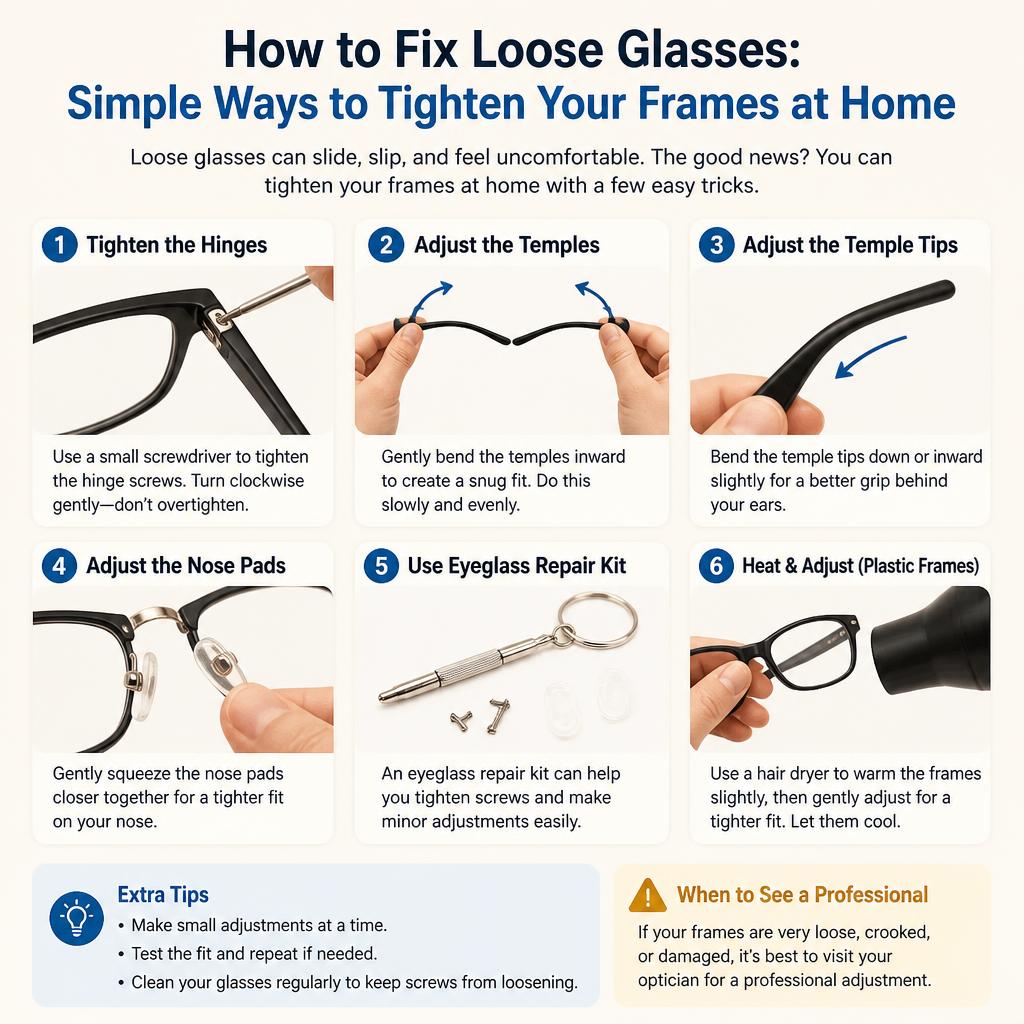
How to Fix Loose Glasses by Tightening the Screws
Loose hinge screws are one of the most common reasons glasses feel shaky. This is also one of the easiest fixes.
Hold your glasses carefully and find the tiny screws near the hinges. These are the parts where the arms connect to the front frame.
Use a small eyeglass screwdriver and turn the screw clockwise. Do this slowly. One or two gentle turns are usually enough.
Do not overtighten the screw. If it becomes too tight, the arm may stop opening and closing smoothly.
After tightening, wear your glasses and check the fit. If they feel more stable, you have found the main issue.
What If the Screw Keeps Coming Loose?
Sometimes a screw keeps loosening again after a few days. This can happen when the screw thread is worn or the hinge has widened.
For a temporary fix, apply a tiny amount of clear nail polish to the screw after tightening it. Let it dry before wearing the glasses.
This helps hold the screw in place for a short time. It is not a permanent repair, but it can work well until you visit an optical shop.
If the screw is missing or damaged, replace it with a matching eyeglass screw. Many small repair kits include several sizes.
This is an important part of how to fix loose glasses, especially if the frame keeps feeling loose again and again.
How to Fix Loose Glasses That Slide Down Your Nose
If your glasses keep sliding down your nose, the problem may be the nose pads, bridge fit, or temple arms.
For glasses with adjustable nose pads, gently press the pads closer together. This helps them grip your nose better.
Use your fingers, not heavy pliers, unless the pads are very stiff. If you use pliers, cover the metal with a soft cloth first.
Move each nose pad a little at a time. Then try the glasses on again. Small changes can make a big difference.
If your glasses have plastic frames without nose pads, the bridge may be too wide for your nose. In that case, you may need grip pads or professional adjustment.
Use Nose Pads for Extra Grip
Soft stick-on nose pads can help if your glasses slide often. They add a small cushion between your nose and the frame.
They are helpful for plastic frames, oily skin, or glasses that sit too low. They can also make heavy frames feel more comfortable.
Clean the frame before applying the pads. If the surface is oily or dusty, the pads may not stick well.
This simple method is often the fastest answer when someone asks how to fix loose glasses without bending the frame.
How to Fix Loose Glasses With Wide Arms
If the arms of your glasses spread too far outward, they will not hold your head properly. This makes the glasses slide and feel unstable.
For metal frames, gently bend the temple arms inward. Hold the frame near the hinge and apply light pressure.
Do not bend both arms too much at once. Adjust one side slightly, try the glasses on, and then adjust again if needed.
For plastic frames, avoid forcing the arms while they are cold. Plastic can crack if bent too quickly.
Warm the arms with warm water for about 30 to 60 seconds. Then gently shape them inward.
How to Adjust Plastic Frames Safely
Plastic frames need extra care because they are less flexible than metal frames. Heat makes them easier to adjust.
Run warm water over the temple arms. The water should be warm, not boiling. Boiling water can damage lenses and coatings.
After warming, gently bend the arms inward or downward, depending on where the glasses feel loose.
Hold the adjusted shape for a few seconds while the plastic cools. Then wear the glasses and check the fit.
This is a safe way to handle how to fix loose glasses when your frames are plastic and slightly stretched.
How to Fix Loose Glasses Behind the Ears
Sometimes glasses feel loose because the tips behind your ears are not curved enough. These tips help keep the frame secure.
If the ends of the arms are too straight, the glasses may slide forward when you look down.
For metal frames, gently curve the temple tips downward. This helps them sit more firmly behind your ears.
For plastic frames, warm the temple tips first with warm water. Then bend them slowly and gently.
The goal is comfort, not pressure. Your glasses should feel secure, but they should not pinch your ears or leave painful marks.
Fix Glasses That Sit Crooked
Crooked glasses can feel loose even when the screws are tight. One side may sit higher, lower, or farther away from your face.
Place your glasses on a flat surface. Check if both temple arms touch the table evenly.
If one arm is higher, the frame may be twisted. Hold the frame carefully and make very small adjustments.
Do not twist the lenses or pull hard on the bridge. This can damage the frame or loosen the lenses.
If the glasses are badly crooked, it is better to visit an optician. A professional can adjust them with proper tools and heat.
Check the Nose Pads for Uneven Fit
Uneven nose pads can also make glasses feel loose or crooked. One pad may sit closer to your nose than the other.
Look closely in a mirror. If one lens sits higher, the nose pads may need a small adjustment.
Gently move the nose pads so they sit evenly on both sides of your nose. They should touch your skin without digging in.
A balanced nose pad fit can improve comfort quickly. It also helps keep your lenses in the right position.
When learning how to fix loose glasses, nose pad balance is easy to overlook, but it matters a lot.
What to Do If Your Glasses Are Too Big
Sometimes glasses are loose because the frame size is simply too large. This is common when buying frames online without trying them on.
If the frame width is too wide, small adjustments may help, but they may not fully solve the issue.
You can use anti-slip ear hooks, nose pads, or temple grips for extra support. These accessories help glasses stay in place during daily use.
Still, if the frame is much too big, the best solution may be a better-sized pair.
Glasses should fit like a comfortable shirt. A small adjustment can improve the fit, but the wrong size will always feel wrong.
Avoid These Mistakes When Fixing Loose Glasses
Many people damage their glasses by trying to fix them too quickly. Small frames need patience.
Avoid using super glue on hinges or screws. It can block movement and make future repairs harder.
Do not use boiling water, open flames, or hair dryers on high heat. Too much heat can damage lenses, coatings, and plastic frames.
Do not bend the bridge too hard. The bridge is one of the most sensitive parts of the frame.
When working on how to fix loose glasses, remember this simple rule: adjust slowly, check often, and stop if the frame resists.
When Should You Visit an Optician?
Home fixes are useful for small problems, but some issues need professional help.
Visit an optician if your glasses are badly bent, cracked, missing parts, or still loose after adjustment.
You should also get help if the lenses keep popping out or if the frame feels weak near the hinge.
Most optical shops can tighten screws, adjust frames, replace nose pads, and reshape arms quickly.
A professional adjustment is worth it when your glasses are expensive, new, or important for daily vision.
Can Loose Glasses Affect Your Vision?
Yes, loose glasses can affect how clearly you see. Your lenses are made to sit in a certain position in front of your eyes.
When glasses slide down, tilt, or sit crooked, your eyes may not look through the correct part of the lens.
This can cause eye strain, headaches, blurry vision, or discomfort, especially with strong prescriptions.
That is why how to fix loose glasses is not only about comfort. It is also about keeping your vision stable.
As one practical reminder goes, “Clear lenses are only helpful when they sit where they are supposed to sit.”
How to Keep Glasses From Getting Loose Again
Once your glasses fit well, take care of them so they stay that way. Daily habits make a big difference.
Use both hands when putting on or removing your glasses. Pulling them off with one hand can stretch one side.
Keep your glasses in a hard case when you are not wearing them. This protects them from pressure, bending, and accidental drops.
Clean them with a microfiber cloth and proper lens cleaner. Rough handling during cleaning can loosen parts over time.
Check the screws every few weeks. A quick tightening can stop a small problem before it becomes annoying.
Simple Daily Tips for Better Glasses Fit
Good glasses care does not need to be complicated. A few small habits can keep your frames comfortable for longer.
Try these easy tips:
- Do not place glasses on your head
- Avoid leaving them in a hot car
- Keep them away from heavy bags
- Clean them gently
- Store them in a case
- Check screws regularly
These habits help prevent loose arms, bent frames, and sliding lenses.
The more gently you treat your glasses, the longer they hold their shape.
Best Quick Fixes for Different Loose Glasses Problems
If your glasses are loose because of screws, tighten the hinge screws with a small screwdriver.
If they slide down your nose, adjust the nose pads or add stick-on nose pads.
If the arms are too wide, bend them inward gently. Warm plastic frames first before adjusting.
If the glasses feel loose behind your ears, curve the temple tips slightly downward.
If the frame is crooked, check the balance on a flat surface and adjust carefully, or visit an optician.
This quick breakdown makes how to fix loose glasses easier because you can match the fix to the problem.
Final Thoughts on How to Fix Loose Glasses
Loose glasses are annoying, but they are often easy to fix. A small screw turn, a gentle arm adjustment, or better nose pad placement can make your glasses feel comfortable again.
The key is to move slowly and avoid forcing the frame. Glasses are built for daily use, but they are still delicate.
If your frames are expensive, badly bent, or still loose after trying simple fixes, let an optician handle them.
Now that you know how to fix loose glasses, you can solve most small fit problems at home and enjoy clearer, more comfortable vision every day.
