

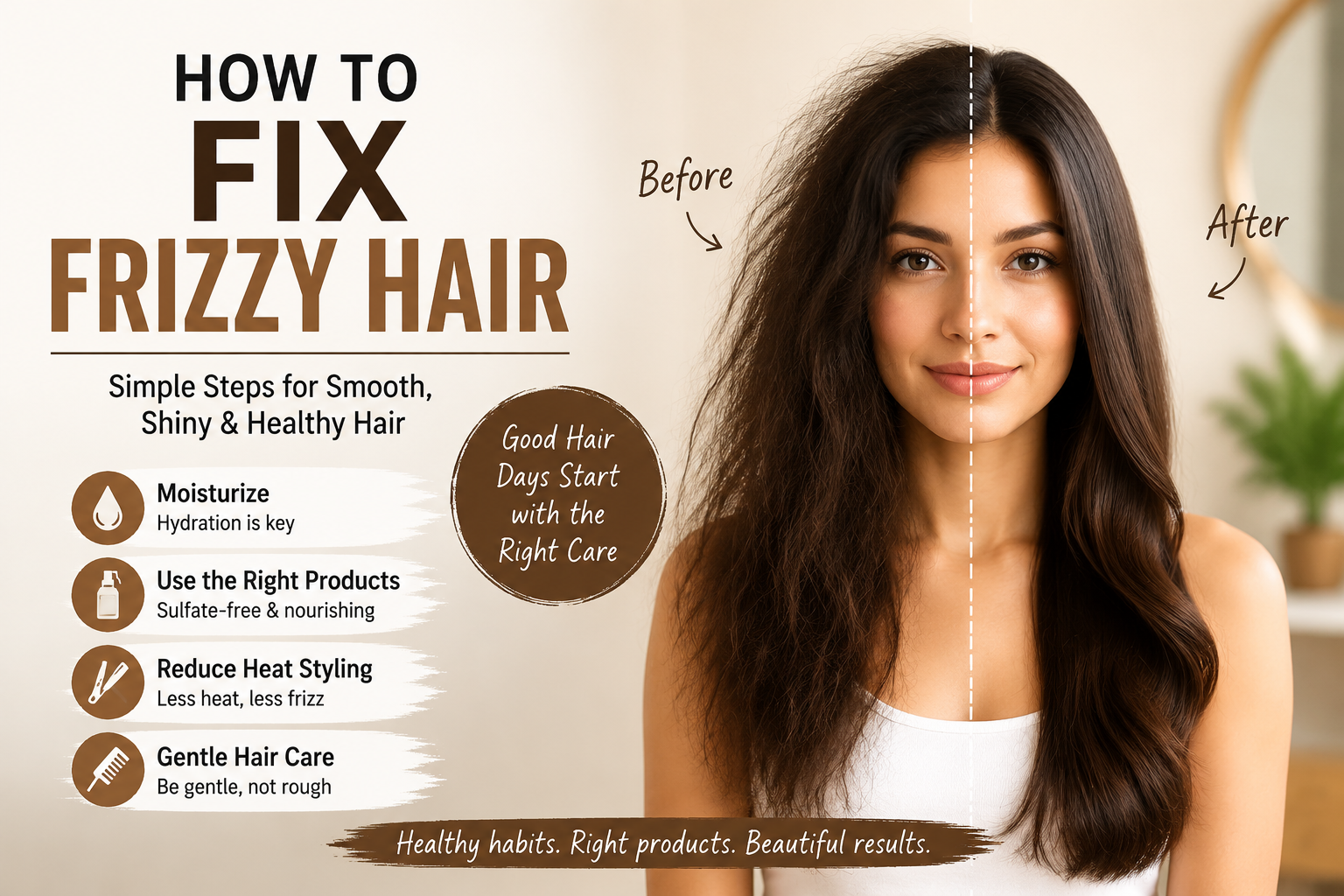
Frizzy hair can feel like an uninvited guest that shows up every day. But the good news? Learning how to fix frizzy hair isn’t complicated. With the right techniques, products, and habits, you can transform unruly strands into smooth, shiny hair that behaves beautifully. Here’s your complete guide.
Understanding Why Hair Gets Frizzy
Frizz happens when hair strands swell and absorb moisture from the air. Damaged or porous hair attracts humidity, which makes it puff up. Common causes include:
- Over-washing – stripping natural oils.
- Heat styling – using flat irons or blow dryers without protection.
- Chemical treatments – coloring, perming, or bleaching.
- Environmental factors – humidity, sun exposure, wind.
“Frizz is just your hair begging for moisture,” explains hairstylist Emma Lewis. Knowing the cause is the first step in learning how to fix frizzy hair effectively.
Moisturize Your Hair Properly
Hydration is key. Frizz often comes from dry hair, so giving strands moisture keeps them calm.
- Use a sulfate-free shampoo to avoid stripping oils.
- Apply a deep conditioner once or twice a week.
- Try leave-in conditioners for added moisture throughout the day.
A tip from professionals: focus on the mid-lengths and ends rather than the scalp for maximum smoothness.
Use the Right Hair Products
Not all hair products are created equal. Choosing the right formula can drastically reduce frizz.
- Serums and oils: Lightweight oils like argan or jojoba smooth the cuticle.
- Anti-frizz creams: Seal moisture and tame flyaways.
- Heat protectants: Essential if you use hot tools regularly.
Always read the label: look for products that specifically say ‘frizz control’ or “hydrating.”
Dry Hair the Smart Way
Towel-drying incorrectly can cause frizz. The rough rubbing damages the cuticle.
- Blot with a microfiber towel instead of rubbing.
- Air dry whenever possible.
- If you blow-dry, use a cool setting and a diffuser attachment.
“Your hair cuticle is like tiny shingles on a roof. Rough handling lifts them, inviting frizz,” says salon expert Daniel Rios.
Heat Styling Tips for Frizz-Free Hair
Excessive heat can worsen frizz. Protect your strands with these habits:
- Use flat irons or curling irons sparingly.
- Always apply heat protectant spray before styling.
- Limit temperature to below 350°F (177°C) for fine hair, 380°F (193°C) for thick hair.
This way, you can style without sacrificing hair health.
Trim Regularly
Split ends make frizz worse. Even minor damage spreads along the strand, creating uneven texture.
- Get a trim every 6–8 weeks.
- Ask your stylist for a dusting or micro-trim if you don’t want length cut.
- Healthy ends = smoother hair overall.
Regular trims are one of the simplest ways to keep frizz in check.
Protect Hair from Humidity
Humidity is a frizz trigger. You can reduce exposure and shield your hair:
- Wear a silk or satin scarf in humid weather.
- Use anti-humidity sprays.
- Avoid over-brushing, which stimulates frizz in damp conditions.
Think of it as giving your hair a protective raincoat for bad weather.
Overnight Hair Care
How you sleep affects your hair’s texture.
- Use a silk pillowcase instead of cotton.
- Try braiding hair loosely at night to prevent tangling.
- Apply a small amount of leave-in conditioner or oil before bed.
These small steps keep hair smooth and ready to go in the morning.
Natural Remedies to Fix Frizz
If you prefer DIY options, several natural ingredients can help:
- Coconut oil: Deeply moisturizes and smooths.
- Aloe vera gel: Seals hair cuticles.
- Honey masks: Adds shine and hydration.
Combine them into masks once a week for noticeable results. “Nature often has the simplest solutions for stubborn frizz,” notes beauty blogger Claire Nguyen.
Everyday Habits That Reduce Frizz
- Avoid washing hair daily.
- Limit hot water; lukewarm is better.
- Use wide-tooth combs instead of brushes on wet hair.
- Drink plenty of water – internal hydration reflects on your hair.
Consistency is key. Small daily habits make a big difference.
When to See a Professional
Sometimes frizz signals damage that home care can’t fix.
- Hair feels dry and brittle despite moisturizing.
- Frizz is unmanageable even after proper care.
- Consider treatments like keratin smoothing or professional deep-conditioning.
A stylist can tailor solutions to your hair type and condition.
Summary: Key Steps to Fix Frizzy Hair
- Hydrate – deep conditioners and leave-in products.
- Protect – from heat and humidity.
- Trim – remove split ends regularly.
- Style smartly – air dry, use proper tools.
- Maintain habits – silk pillowcases, minimal friction.
Mastering how to fix frizzy hair is about combining the right products, techniques, and consistent care. Over time, you’ll enjoy smoother, shinier, healthier hair.
