

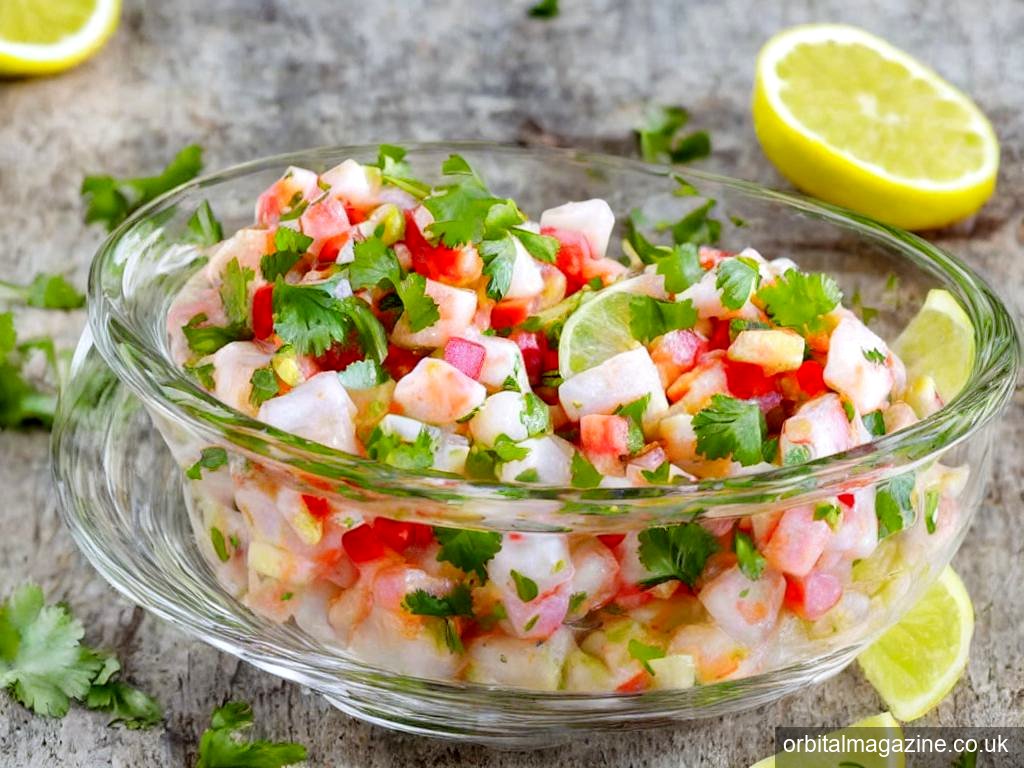
Introduction to Ceviche Peruano
Ceviche Peruano, also known as Ceviche a la Peruana, is the national dish of Peru and a staple of Peruvian cuisine. This refreshing and flavorful dish consists of raw fish marinated in fresh lime juice, mixed with onions, tomatoes, and aji amarillo peppers. The origins of ceviche date back to the ancient Inca Empire, where fish was marinated in citrus juices and spices to preserve it. Over time, the dish evolved and spread throughout the country, becoming a beloved national icon.
The History of Ceviche Peruano
Ceviche has its roots in the pre-Columbian era, when the Incas used to marinate fish in citrus juices and spices to preserve it. The word “ceviche” comes from the Spanish word “cebir,” meaning “to marinate.” After the arrival of the Spanish conquistadors, the dish spread throughout the country and evolved, incorporating new ingredients and flavors. Today, ceviche is a staple of Peruvian cuisine and can be found in restaurants and street food stalls throughout the country.
The Ingredients of Ceviche Peruano
The ingredients of ceviche peruano are simple yet flavorful. The dish typically consists of:
* Raw fish, such as corvina, sea bass, or halibut
* Fresh lime juice
* Onions, thinly sliced
* Tomatoes, diced
* Aji amarillo peppers, diced
* Salt and pepper to taste
* Cilantro, chopped (optional)
The Preparation of Ceviche Peruano
The preparation of ceviche peruano is straightforward. The fish is marinated in fresh lime juice, mixed with onions, tomatoes, and aji amarillo peppers. The mixture is then refrigerated for at least 30 minutes to allow the flavors to meld together. The dish is typically served with rice, corn, and crispy corn kernels.
The Significance of Ceviche Peruano
Ceviche peruano is more than just a dish; it’s a cultural phenomenon. The dish has played a significant role in Peruvian cuisine and history, and its significance extends beyond the plate. Ceviche has been recognized by UNESCO as an Intangible Cultural Heritage of Humanity, acknowledging its importance in Peruvian culture and identity.
Intangible Cultural Heritage of Humanity is a designation given by UNESCO to cultural practices, traditions, and expressions that are considered to be of outstanding value to the cultural heritage of humanity.
Where to Find the Best Ceviche Peruano Near You
If you’re looking for the best ceviche peruano near you, there are several options to consider. You can try visiting a Peruvian restaurant or a seafood restaurant that serves ceviche. You can also try looking for street food stalls or food trucks that specialize in ceviche. Some popular places to find ceviche peruano include:
* Peruvian restaurants, such as Andina or Pio Pio
* Seafood restaurants, such as Joe’s Seafood or The Crab Pot
* Street food stalls or food trucks, such as those found in food markets or festivals
Authentic Recipes for Ceviche Peruano
If you’re feeling adventurous, you can try making ceviche peruano at home. Here’s a simple recipe to get you started:
Ingredients:
* 1 pound of raw fish, such as corvina or sea bass
* 1/2 cup of fresh lime juice
* 1/4 cup of chopped onions
* 1/4 cup of diced tomatoes
* 1/4 cup of diced aji amarillo peppers
* Salt and pepper to taste
* Cilantro, chopped (optional)
Instructions:
1. Cut the fish into small pieces and place it in a shallow dish.
2. Squeeze the fresh lime juice over the fish and mix well.
3. Add the chopped onions, diced tomatoes, and diced aji amarillo peppers to the dish and mix well.
4. Refrigerate the mixture for at least 30 minutes to allow the flavors to meld together.
5. Serve the ceviche with rice, corn, and crispy corn kernels.
If you’re looking for a more comprehensive guide to making ceviche peruano, check out this authentic recipe from Eat Peru.
Conclusion
Ceviche peruano is a delicious and refreshing dish that’s steeped in history and culture. Whether you’re looking for a place to try it or a recipe to make it at home, there are plenty of options to consider. From Peruvian restaurants to street food stalls, ceviche peruano is a culinary experience you won’t want to miss.
If you’re looking for more information on Peruvian cuisine or other delicious dishes, check out our article on the best BBQ near you.
