

Introduction
Across much of the United States, the growing season is shorter than gardeners would like. A late frost in May and an early one in October bracket the year, leaving tomatoes green on the vine and seedlings waiting indoors on windowsills. A lean-to greenhouse grow tent stretches that calendar by capturing solar heat against the south wall of a house or garage, giving plants a warm, bright space to start early and finish late. Built against an existing wall, it borrows structural support and reflected warmth while taking up a narrow strip of yard.
How a Lean-To Greenhouse Works
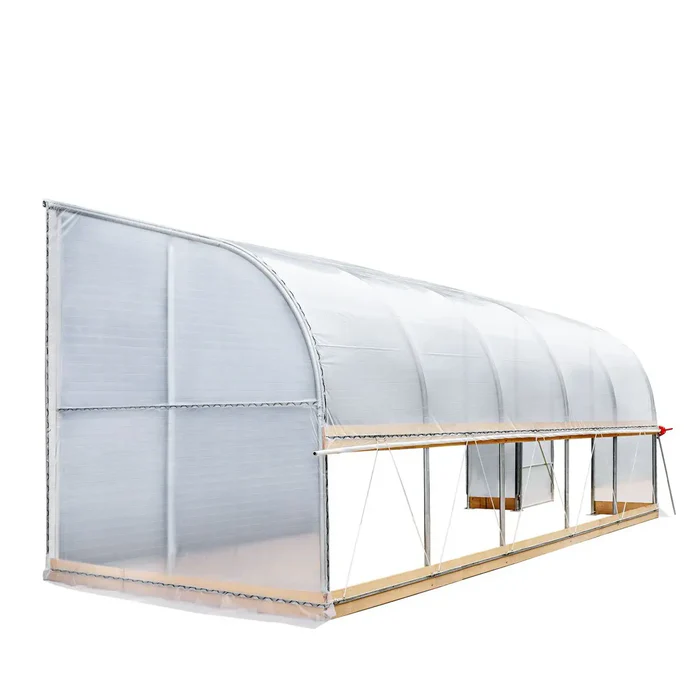
A lean-to greenhouse is a half-span structure with one side built against a wall and the other sloping out to the ground. A frame of coated steel tubing supports a clear cover that admits sunlight, which warms the soil, benches, and air inside. A clear ethylene vinyl acetate film around six mil thick transmits light while trapping heat, and the shared wall radiates stored warmth back into the space through cool nights, moderating the temperature swings that stress young plants.
Season Extension and Yield
A few extra weeks at each end of the season changes what a gardener can grow. A backyard greenhouse lets a grower start seedlings in March, harden them safely, and keep harvesting after the first fall frost has ended the open garden. A home gardener in Minnesota can raise warm-season crops that the short northern summer would otherwise cut short, turning a marginal climate into a productive one and reducing the cost of buying nursery transplants each spring. A protected space also shelters tender plants from hail, heavy rain, and many of the pests and diseases that move freely through an open garden bed.
Build and Materials
The durability of a film-covered greenhouse rests on its frame coating, cover quality, and anchoring. A powder-coated or galvanized frame resists rust in the humid interior, while a thicker film resists tearing and ultraviolet breakdown over multiple seasons. A ten by twenty foot footprint gives walk-in room for benches and tall crops, and secure anchoring to the wall and ground keeps the structure stable against wind that funnels along a building.
Performance Factors
Several conditions decide how a season extension greenhouse performs:
· Orientation toward the winter sun
· Ventilation to prevent overheating
· Anchoring against wind along the wall
· Film clarity and ultraviolet resistance
· Wall color and mass for stored heat
In the high desert of New Mexico, gardeners vent aggressively on sunny winter days, since a closed greenhouse can overheat even when frost covers the ground outside.
Safe Use and Maintenance
Anchor the frame firmly to the wall and ground before the first windy day, and provide ventilation to release the heat that builds quickly on sunny afternoons. Inspect the film for tears before each season, clear snow from the slope to protect the frame, and keep the doorway zipped to hold heat on cold nights.
Types and Accessories
Freestanding greenhouses suit open yards, while lean-to models fit narrow side spaces against a wall. Useful additions include roll-up side vents, shade cloth for summer, interior benches, a thermometer, and a small heater or thermal mass such as water barrels to buffer overnight cold.
What Buyers Should Weigh
Choosing a greenhouse is a question of fit to your site and climate. Before buying, weigh these factors:
· Footprint and height for your crops
· Frame coating and corrosion resistance
· Film thickness and ultraviolet rating
· Ventilation and door design
· Anchoring suited to your wall and wind
· Warranty and replacement covers available
Advantages and Limitations
Advantages:
· Extends the season at both ends
· Borrows wall support and stored heat
· Fits a narrow space beside the house
Limitations:
· Film covers need periodic replacement
· Overheats quickly without ventilation
· Needs a suitable south-facing wall
Industry Outlook
As more Americans grow food at home for freshness and savings, demand for affordable season-extension structures keeps rising. Manufacturers are improving film durability, ventilation, and snap-together frames that a homeowner can raise alone. The growing range of greenhouses and grow structures now spans small cold frames to walk-in tunnels, a sign that protected growing has moved from a hobbyist niche into the mainstream backyard.
