

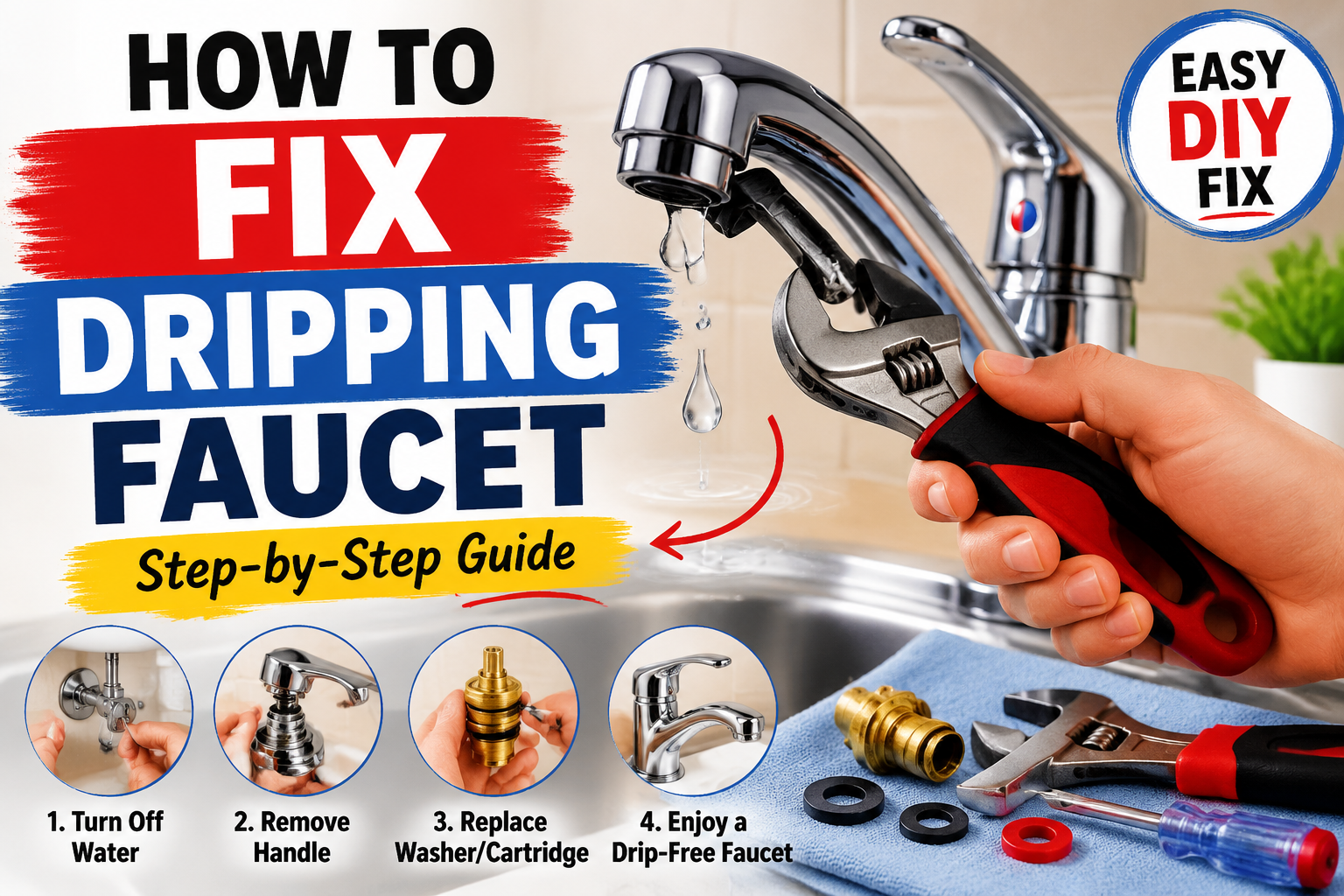
A dripping faucet may look like a small problem, but it can waste water, raise your bill, and slowly damage your sink area. The good news is that most faucet leaks are easy to fix with basic tools and a little patience.
If you are wondering how to fix dripping faucet issues at home, the first step is to understand where the drip is coming from. In many cases, the problem is a worn washer, damaged O-ring, loose part, or old cartridge inside the faucet.
Think of your faucet like a small door for water. When the parts inside stop sealing properly, water keeps slipping through even when the handle is turned off. As one plumber might say, “A drip is not just noise in the sink; it is your faucet asking for a small repair before it becomes a bigger one.”
This guide explains how to fix dripping faucet problems in a clear, simple, and practical way.
Why Is Your Faucet Dripping?
A faucet usually drips because an internal part is no longer sealing the water flow tightly. Over time, rubber parts become hard, metal parts wear down, and mineral buildup can stop the faucet from closing fully.
The most common causes include worn washers, damaged O-rings, faulty cartridges, corroded valve seats, or loose faucet parts. These small parts do a big job every time you turn the faucet on and off.
For example, if your kitchen faucet drips from the spout, the cartridge or washer may be worn out. If water leaks near the handle, the O-ring or packing nut may be the problem.
Before learning how to fix dripping faucet repairs, it helps to know your faucet type. Different faucets use different internal parts, so the repair steps can vary slightly.
Common Types of Faucets
There are four common faucet types found in most homes. Each one has a different design, and knowing the type helps you choose the right repair method.
Compression faucets usually have two separate handles, one for hot water and one for cold. These often use rubber washers, which wear out over time.
Cartridge faucets may have one handle or two handles. They use a cartridge inside the faucet body to control water flow.
Ball faucets are common in kitchens and usually have one handle that moves over a rounded ball assembly.
Ceramic disc faucets are modern and durable. They use ceramic discs to control water flow, but they can still leak if seals or cartridges fail.
When people search for how to fix dripping faucet, they often do not know the faucet type. That is fine. You can still inspect the handle style and internal part once the faucet is opened.
Tools You May Need
You do not need a full toolbox to repair most faucet drips. A few simple tools are usually enough.
You may need:
- Adjustable wrench
- Flathead screwdriver
- Phillips screwdriver
- Allen key
- Replacement washer, O-ring, cartridge, or seals
- Plumber’s grease
- Clean cloth
- Small bowl for screws
- White vinegar for mineral buildup
Keep all small screws and parts in a bowl as you work. Faucet parts are tiny, and losing one can turn a quick repair into a frustrating search under the sink.
A helpful tip is to take photos with your phone before removing each part. This makes it easier to put everything back in the correct order.
Step 1: Turn Off the Water Supply
Before opening the faucet, turn off the water supply. This is the most important first step.
Look under the sink for two shutoff valves. One controls hot water, and the other controls cold water. Turn both valves clockwise until they stop.
After that, turn on the faucet to release any water left in the lines. This also confirms that the water is fully shut off.
If there are no shutoff valves under the sink, you may need to turn off the main water supply. Never remove faucet parts while water is still active, because it can spray quickly and create a mess.
Step 2: Plug the Drain
Before removing screws or small parts, plug the sink drain. This simple step can save you a lot of trouble.
You can use the sink stopper or place a towel over the drain. Small faucet screws can easily fall into the drain if you are not careful.
This is one of those small steps people often skip, but it matters. As the saying goes, “The easiest repair is the one where every part stays where you can see it.”
When learning how to fix dripping faucet issues, staying organized is just as important as using the right tools.
Step 3: Remove the Faucet Handle
Most faucet handles are held in place by a screw. The screw may be visible, or it may be hidden under a small decorative cap.
Use a flathead screwdriver to gently remove the cap. Then use the right screwdriver or Allen key to loosen the handle screw.
Pull the handle upward or outward, depending on the faucet design. If it feels stuck, do not force it too hard. Mineral buildup can make old handles tight.
Wrap the handle with a cloth and gently wiggle it loose. Avoid using too much pressure, because you do not want to crack the handle or damage the faucet finish.
Step 4: Check the Internal Parts
Once the handle is removed, you can inspect the parts inside. This is where most faucet leaks are found.
Look for worn rubber washers, cracked O-rings, broken seals, or a damaged cartridge. If the rubber looks flat, stiff, torn, or brittle, it should be replaced.
If you see mineral buildup, clean the area with white vinegar and a cloth. Hard water deposits can stop parts from sealing tightly.
This step is the heart of how to fix dripping faucet repairs. In most cases, replacing one small worn part stops the drip completely.
Step 5: Replace the Washer
If you have a compression faucet, a worn washer is often the reason for the drip. The washer sits at the bottom of the valve stem and presses against the valve seat to stop water flow.
Remove the screw holding the washer in place. Take off the old washer and replace it with a new one of the same size.
Make sure the new washer sits flat and secure. If it is too big, too small, or crooked, the faucet may still drip.
A washer is inexpensive, but it does a lot of work. Every time you turn the handle, that little rubber piece handles pressure from the water line.
Step 6: Replace the O-Ring
If water leaks around the faucet handle, the O-ring may be damaged. An O-ring is a small rubber ring that helps seal the faucet body.
Remove the old O-ring carefully. If it is cracked, stretched, or dry, replace it with a matching size.
Apply a small amount of plumber’s grease to the new O-ring before installing it. This helps it slide into place and last longer.
When fixing leaks near the handle, this step is often the solution. Many people focus only on the spout drip and forget that handle leaks need attention too.
Step 7: Replace the Cartridge
Many modern faucets use a cartridge instead of a washer. If your faucet has a cartridge, replacing it may stop the drip.
After removing the handle, loosen any retaining clip or nut holding the cartridge in place. Pull the cartridge straight out.
Take the old cartridge to a hardware store if you are unsure which replacement to buy. Cartridges come in different sizes and shapes, so matching the exact type matters.
Install the new cartridge in the same position as the old one. If it is installed backward or misaligned, hot and cold water may not work correctly.
Step 8: Check the Valve Seat
The valve seat connects the faucet and the spout area. If it becomes corroded or rough, water can leak even after replacing the washer.
Look inside the faucet body after removing the stem. If the valve seat looks rough, scratched, or full of mineral buildup, it may need cleaning or replacement.
You can clean light buildup with white vinegar. For serious damage, a valve seat tool may be needed.
If you replace washers but the drip returns quickly, the valve seat may be the hidden problem. It is like putting a new tire on a bent rim; the new part cannot seal well if the surface under it is damaged.
Step 9: Reassemble the Faucet
After replacing the damaged part, put the faucet back together in the same order. This is where your photos can help.
Tighten screws and nuts firmly, but do not overtighten them. Too much force can damage threads, crack parts, or squeeze rubber seals out of place.
Put the handle back on and secure the screw. Replace the decorative cap if your faucet has one.
Before turning the water back on, check that all parts are seated properly and the handle moves smoothly.
Step 10: Turn the Water Back On
Slowly turn the shutoff valves counterclockwise to restore the water supply. Do this gently to avoid sudden pressure.
Turn the faucet on and let the water run for a few seconds. This clears air from the line and helps you check if everything works correctly.
Turn the faucet off and watch the spout. If no water drips, the repair worked.
Also check around the handle and base of the faucet. A dry faucet area means the seals are holding properly.
What If the Faucet Still Drips?
If the faucet still drips after replacing the washer, O-ring, or cartridge, do not panic. It usually means another part is damaged or the replacement part is not seated correctly.
Turn the water off again and reopen the faucet. Check whether the new part is the correct size and installed in the right position.
Also inspect the valve seat, retaining nut, and faucet body. A loose nut or rough valve seat can keep the faucet from sealing fully.
If the faucet is very old, replacing the full faucet may be smarter than repairing one part at a time. Sometimes the best fix is not another small repair but a fresh start.
How to Fix a Dripping Kitchen Faucet
Kitchen faucets are used many times a day, so they wear out faster than some bathroom faucets. A dripping kitchen faucet is often caused by a worn cartridge, loose handle part, or damaged seal.
For a single-handle kitchen faucet, remove the handle and inspect the cartridge. If the drip comes from the spout, the cartridge is often the main issue.
For a two-handle kitchen faucet, check whether the drip is from hot or cold water. Turn off one supply valve at a time to find which side is leaking.
If you are searching how to fix dripping faucet problems in the kitchen, start with the cartridge or washer. These are the most common causes and usually the easiest to replace.
How to Fix a Dripping Bathroom Faucet
Bathroom faucets often drip because washers and seals wear down from daily use. Hard water can also leave mineral deposits inside the faucet.
If the faucet has two handles, remove the handle on the leaking side first. Replace the washer or cartridge depending on the faucet style.
If water leaks around the base of the handle, check the O-ring. A small O-ring can create a noticeable leak when it becomes loose or cracked.
Bathroom faucet repairs are usually simple, but be gentle with decorative finishes. Use a cloth under your wrench to avoid scratches.
How to Know Which Side Is Leaking
If you have a two-handle faucet, you need to know whether the hot or cold side is causing the drip. This saves time and avoids replacing parts that are still fine.
Turn off the cold water valve under the sink first. If the drip stops, the cold side is the problem.
If the drip continues, turn the cold valve back on and turn off the hot water valve. If the drip stops then, the hot side is the issue.
This simple test helps you repair the correct side. It is one of the easiest ways to make how to fix dripping faucet work faster and more accurately.
When Should You Call a Plumber?
Many dripping faucets can be fixed at home, but some situations need professional help. Call a plumber if the faucet is badly corroded, parts are stuck, or the leak continues after repairs.
You should also call a plumber if water leaks under the sink, inside the cabinet, or from the wall connection. These leaks can cause hidden damage.
If your shutoff valves do not work, do not force them. Old valves can break and create a bigger water problem.
A good rule is simple: fix small faucet parts yourself, but get help when the leak goes beyond the faucet body.
How Much Water Can a Dripping Faucet Waste?
A slow drip may not seem serious, but it can waste a surprising amount of water over time. One drop every few seconds can become gallons of wasted water each month.
Besides the water bill, constant dripping can stain sinks, wear down fixtures, and leave mineral marks. It can also make a quiet room feel annoying at night.
A dripping faucet is like a tiny leak in your wallet. You may not notice it right away, but it keeps taking a little more every day.
That is why learning how to fix dripping faucet issues is useful for every homeowner or renter.
How to Prevent Faucet Drips in the Future
Once your faucet is fixed, a few simple habits can help prevent future drips. Do not turn handles too tightly, because this can crush washers and damage seals.
Clean mineral buildup around the faucet regularly. Hard water deposits can affect how well parts move and seal.
If your home has very hard water, consider using a water softener or cleaning faucet parts more often. This can help extend the life of your fixtures.
Also repair small leaks early. A small drip is easier and cheaper to fix than a faucet that has been leaking for months.
Common Mistakes to Avoid
One common mistake is buying the wrong replacement part. Always match the old part carefully before installing a new one.
Another mistake is overtightening screws or nuts. Tight is good, but too tight can damage the faucet and create new leaks.
Some people forget to turn off the water supply before starting. This can quickly turn a simple repair into a wet mess.
Also avoid using too much force on stuck parts. If something will not move, clean mineral buildup first or use the right tool.
Quick Troubleshooting Guide
Use this quick guide if you want to find the problem faster:
- Drip from spout: Worn washer, cartridge, or valve seat
- Leak near handle: Damaged O-ring or loose packing nut
- Leak under sink: Supply line or connection issue
- Drip after repair: Wrong part size or damaged valve seat
- Stiff handle: Mineral buildup or worn internal part
This quick check makes how to fix dripping faucet repairs easier because it points you toward the most likely cause first.
Best Simple Fix for Most Faucet Drips
The best simple fix is to replace the worn sealing part inside the faucet. For compression faucets, that part is usually the washer. For modern faucets, it is often the cartridge.
If you are not sure which part you need, remove the old part and take it with you to the store. Matching the exact size is better than guessing.
Also clean the faucet body before installing new parts. A clean surface helps the new washer, O-ring, or cartridge seal properly.
In many homes, this small repair can stop the drip in less than an hour.
Final Thoughts
Learning how to fix dripping faucet problems can save water, reduce noise, and prevent bigger plumbing issues. Most faucet drips come from small worn parts, and those parts are usually affordable and easy to replace.
Start by turning off the water, opening the faucet carefully, and checking the washer, O-ring, cartridge, and valve seat. Work slowly, stay organized, and use the correct replacement part.
A dripping faucet may seem minor, but fixing it is one of the simplest ways to protect your home. As a practical homeowner would say, “Small repairs done early are the reason big repairs never happen.”
With the right steps, how to fix dripping faucet is not complicated. It is a simple home repair that most people can handle with care, patience, and the right tools.
