

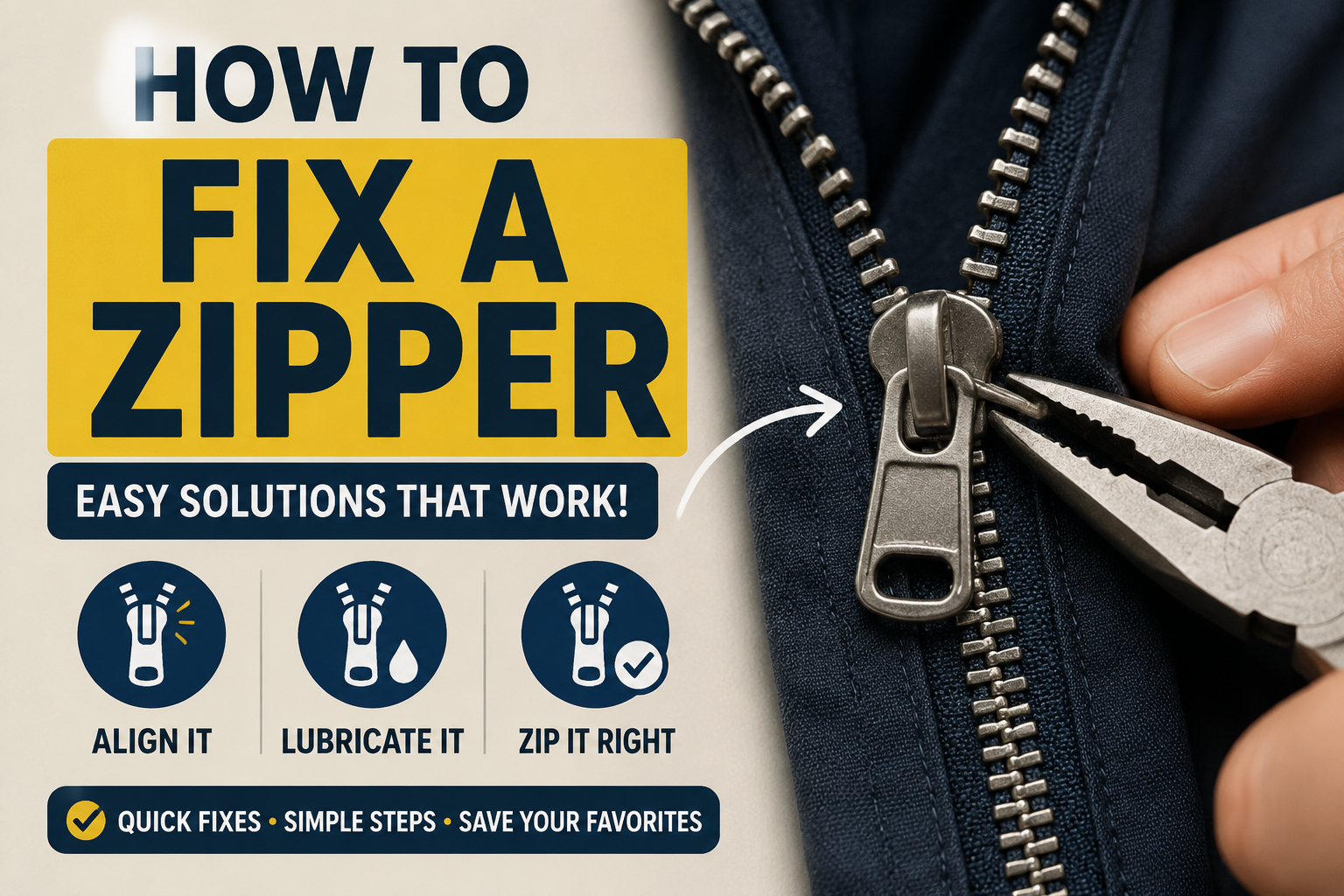
A stuck, broken, or misaligned zipper can turn your day upside down. Whether it’s on your favorite jacket, jeans, or backpack, knowing how to fix a zipper yourself can save you time, money, and frustration. This guide will show practical, step-by-step methods to restore zippers in any situation.
Common Zipper Problems and Why They Happen
Zippers might fail due to wear and tear, improper use, or just age. Here are the typical issues:
- Stuck zipper – fabric or thread caught in the teeth.
- Separated teeth – zipper won’t close properly.
- Slider issues – the pull moves, but the zipper won’t stay shut.
- Broken pull – the handle snaps off, leaving you without leverage.
Understanding the problem helps you pick the right fix. As one repair expert says, “A zipper is only as good as its slider and teeth. Start there.”
How to Fix a Stuck Zipper
A stuck zipper is usually caused by caught fabric or debris. Here’s how to release it:
- Examine the zipper – find what is stuck in the teeth.
- Lubricate the slider – use pencil graphite, soap, or petroleum jelly.
- Gently wiggle the zipper – don’t force it; slow movement prevents damage.
- Remove fabric carefully – use tweezers if needed.
Tip: Graphite from a pencil works wonders because it doesn’t stain like some oils. One real-life hack: rub a bit on the teeth and the slider glides smoothly.
How to Fix Zipper Teeth That Won’t Align
When teeth don’t line up, the slider might be loose or the zipper bent:
- Check the slider – pinch it gently with pliers to tighten.
- Realign the teeth – run the slider back and forth slowly, ensuring teeth mesh.
- Test – make sure the zipper now closes evenly.
Remember: “Never force misaligned teeth; it’s easier to adjust than replace the whole zipper.”
Replacing a Broken Pull
If the pull breaks, you can still make your zipper functional:
- Use a paperclip or keyring – loop it through the slider.
- Attach a zipper pull replacement – many craft or hardware stores sell small kits.
- DIY pull – a small piece of ribbon or string works temporarily.
This simple fix keeps you going until a permanent repair is possible.
How to Repair a Zipper That Keeps Separating
If your zipper opens right after closing, the slider may be worn:
- Check the slider – old sliders lose grip.
- Tighten with pliers – pinch the sides gently to grip the teeth.
- Test the zipper – ensure it holds without forcing.
If tightening doesn’t help, replacing the slider is the next step. Most sliders are inexpensive and easy to swap.
Tips for Sewing a Zipper Back in
Sometimes zippers need complete replacement:
- Measure first – ensure the new zipper matches the old one.
- Remove carefully – cut stitches without damaging fabric.
- Sew neatly – a zipper foot on your sewing machine gives the best results.
- Test before finishing – make sure the slider moves smoothly.
Even beginners can do this with a bit of patience. As a seasoned sewer says, “A neatly sewn zipper is a zipper that lasts a decade.”
Zipper Maintenance Tips to Prevent Future Problems
Preventing issues is always better than fixing them:
- Keep zippers clean – dirt and lint jam sliders.
- Lubricate occasionally – use graphite or a wax stick.
- Handle gently – avoid forcing a stuck zipper.
- Check for damage – repair small issues immediately.
Small habits save big headaches over time.
When to Call a Professional
Some zippers, like on leather jackets, luggage, or outdoor gear, may require professional help:
- Broken teeth in hard-to-replace zippers.
- Complex zippers with multiple sliders.
- Specialty materials like waterproof zippers.
A repair expert can save your gear without compromising the material. “Knowing when to DIY and when to call a pro is key,” advises a leather goods specialist.
DIY vs. Replacement: How to Decide
Ask yourself:
- Is the zipper worn out or just stuck?
- Can a slider replacement solve the problem?
- Will DIY repairs save time or create more hassle?
Simple fixes like lubrication or tightening are quick wins. For major damage, replacing the zipper avoids repeated frustration.
Tools You’ll Need for Zipper Repairs
Having basic tools on hand makes how to fix a zipper much easier:
- Pliers
- Tweezers
- Sewing kit or zipper foot
- Pencil (graphite)
- Soap or petroleum jelly
- Replacement sliders or pulls
Keep a small repair kit in your home for emergencies. A stitch in time truly saves nine.
Quick Fixes You Can Do Anywhere
Even without tools, you can sometimes rescue a zipper:
- Slide a pencil tip to lubricate teeth.
- Use a paperclip as a makeshift pull.
- Unjam fabric with a toothpick.
These clever hacks often save a trip to the repair shop.
Powerful Quotes on Simple Fixes
- “Fixing a zipper is not just about clothing; it’s about saving your day from unnecessary stress.”
- “A little patience and the right technique can restore almost any zipper.”
These reminders encourage even the most impatient DIYers.
Conclusion
Knowing how to fix a zipper empowers you to handle stuck, misaligned, or broken zippers without stress. From lubrication tricks to slider adjustments and replacement techniques, these simple solutions keep your clothes and gear functional. Remember, prevention is key: clean, gentle handling and occasional maintenance prolong the life of any zipper.
With these tips, you’ll never feel helpless when a zipper fails. A smooth slider today keeps frustration away tomorrow.
