

Measuring accurately is one of the most important skills in DIY projects, woodworking, home improvement, sewing, and construction. If you’ve ever looked at the small lines on a tape measure and felt confused, you’re not alone.
Learning how to read a tape measure is easier than it seems. Once you understand what the numbers and markings mean, you’ll be able to measure confidently and avoid costly mistakes.
As the saying goes, “Measure twice, cut once.” A few extra seconds spent measuring correctly can save hours of frustration later.
Why Learning How to Read a Tape Measure Matters
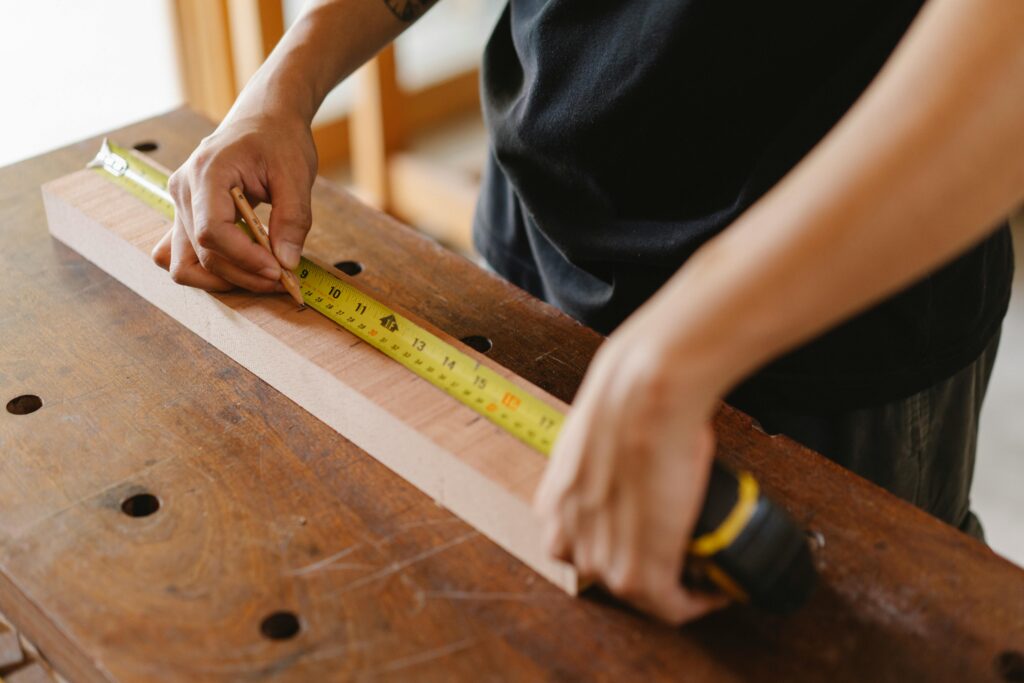
A tape measure is one of the most commonly used tools in homes and workplaces. Whether you’re hanging a picture frame, building furniture, or measuring a room, knowing how to read a tape measure helps ensure accuracy.
Even a small measuring mistake can cause materials to be cut too short or installed incorrectly. That’s why understanding every marking on the tape is essential.
Understanding the Basic Parts of a Tape Measure
Before learning how to read a tape measure, it’s helpful to know its main components.
Key Parts Include:
- Hook or Tang – The metal piece at the end used for measuring edges.
- Tape Blade – The flexible metal strip with measurement markings.
- Lock Button – Holds the tape in place.
- Case – The outer housing that stores the tape.
Each part works together to help you get accurate measurements.
Understanding the Numbers
The large numbers printed on a tape measure represent inches in the United States measurement system.
For example:
- 1 = One inch
- 2 = Two inches
- 3 = Three inches
- 12 = One foot
- 24 = Two feet
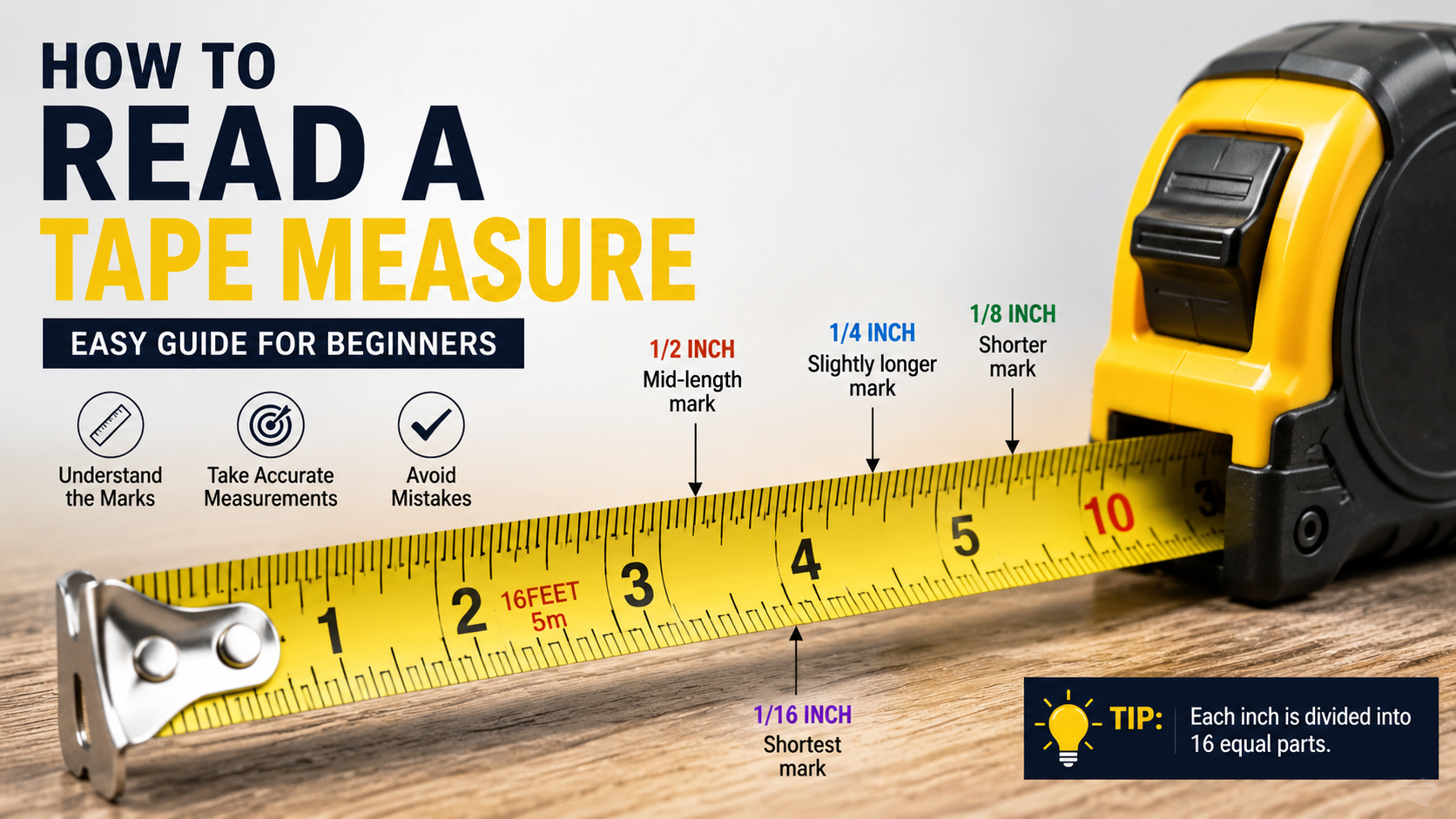
Every inch is divided into smaller sections represented by different-sized lines.
When learning how to read a tape measure, understanding these smaller divisions is the most important step.
What the Different Lines Mean
Between each inch mark, you’ll notice several smaller lines.
These lines represent fractions of an inch.
1 Inch Mark
The longest line on the tape represents a full inch.
Example:
- 1″
- 2″
- 3″
These are the easiest marks to identify.
Half-Inch Marks (1/2″)
The second-longest lines indicate half-inch measurements.
Examples:
- 1½”
- 2½”
- 3½”
There is one half-inch mark between every full inch.
Quarter-Inch Marks (1/4″)
Slightly shorter lines show quarter-inch measurements.
Examples:
- ¼”
- ½”
- ¾”
These divide each inch into four equal sections.
Eighth-Inch Marks (1/8″)
Smaller lines divide each quarter-inch section further.
Examples:
- ⅛”
- ⅜”
- ⅝”
- ⅞”
Many DIY projects rely on eighth-inch accuracy.
Sixteenth-Inch Marks (1/16″)
The shortest lines usually represent sixteenth-inch measurements.
Examples:
- 1/16″
- 3/16″
- 5/16″
- 7/16″
These are common in woodworking and detailed construction work.
A Simple Way to Count the Marks
One of the easiest ways to learn how to read a tape measure is to count the smallest divisions.
Each inch is divided into:
- 16 equal sections
- Each section equals 1/16 inch
For example:
- First small line = 1/16″
- Second small line = 2/16″ (or 1/8″)
- Fourth small line = 4/16″ (or 1/4″)
- Eighth small line = 8/16″ (or 1/2″)
Think of it like slicing a pizza into 16 equal pieces. Each slice represents one small section of an inch.
How to Read Common Measurements
Here are some examples that help make how to read a tape measure easier.
Example 1
If the tape stops at the second small mark after 4 inches:
Measurement = 4 1/8 inches
Example 2
If the tape stops at the fourth small mark after 6 inches:
Measurement = 6 1/4 inches
Example 3
If the tape stops at the eighth small mark after 10 inches:
Measurement = 10 1/2 inches
Example 4
If the tape stops at the twelfth small mark after 7 inches:
Measurement = 7 3/4 inches
Practicing with real examples is one of the fastest ways to master reading measurements.
Understanding Foot Measurements
Tape measures also show feet.
Every 12 inches equals 1 foot.
Examples:
- 12 inches = 1 foot
- 24 inches = 2 feet
- 36 inches = 3 feet
Many tape measures highlight foot measurements in red or use special symbols for easier reading.
When measuring rooms, furniture, or walls, you’ll often use both feet and inches together.
Example:
- 5 feet 8 inches
- 10 feet 3 inches
How to Read Metric Tape Measures
Some tape measures include metric measurements.
Instead of inches, they use:
- Millimeters (mm)
- Centimeters (cm)
- Meters (m)
Metric measurements are generally easier because they use a base-10 system.
For example:
- 10 millimeters = 1 centimeter
- 100 centimeters = 1 meter
Many modern tape measures display both metric and imperial scales side by side.
Common Tape Measure Symbols
When learning how to read a tape measure, you may notice additional markings.
Black Diamonds
Black diamonds usually appear every 19.2 inches.
These markings help construction professionals with framing layouts.
Red Numbers
Red numbers often indicate foot measurements.
For example:
- 12
- 24
- 36
- 48
This makes counting feet faster.
Stud Markings
Some tape measures highlight common wall stud spacing, usually:
- 16 inches
- 24 inches
These markings are useful for construction and renovation projects.
Step-by-Step Guide to Measuring Correctly
Knowing how to read a tape measure is only part of the process. Proper measuring technique matters too.
Step 1: Hook the End
Place the metal hook firmly against the edge of the object.
Step 2: Pull the Tape Straight
Avoid bending or twisting the tape.
A straight tape gives more accurate results.
Step 3: Find the Measurement
Locate the point where the object ends.
Identify the nearest inch and fraction.
Step 4: Record the Measurement
Write the measurement immediately.
Many errors happen because people rely on memory.
Common Mistakes to Avoid
Even experienced DIYers occasionally make measuring mistakes.
Reading the Wrong Mark
Always double-check which line you’re using.
The smallest markings can look similar.
Measuring at an Angle
Keep the tape straight and level.
Angled measurements can produce inaccurate results.
Ignoring Fractions
Don’t round measurements unless necessary.
Even a small fraction can affect the final outcome.
Forgetting the Hook Movement
The end hook is designed to move slightly.
This movement compensates for inside and outside measurements.
It’s normal and helps maintain accuracy.
Quick Practice Exercises
Try these simple exercises to improve your skills.
Exercise 1
Find the sixth small mark after 2 inches.
Answer:
2 3/8 inches
Exercise 2
Find the twelfth small mark after 8 inches.
Answer:
8 3/4 inches
Exercise 3
Find the eighth small mark after 5 inches.
Answer:
5 1/2 inches
Practice a few minutes each day, and reading measurements will soon become automatic.
Professional Tips for Better Accuracy
Professionals often follow a few simple habits.
- Measure twice before cutting.
- Keep the tape straight.
- Use a sharp pencil for marking.
- Read measurements at eye level.
- Double-check fractions.
A carpenter once said that “most building mistakes begin with a measurement mistake.” Accurate measuring truly is the foundation of quality work.
When You Need High Precision
For woodworking, cabinetry, and custom furniture, measurements may need to be accurate to the nearest 1/16 inch.
In these situations:
- Use good lighting.
- Avoid rushed measurements.
- Confirm measurements more than once.
Precision saves materials, time, and money.
Final Thoughts
Learning how to read a tape measure is a simple skill that delivers lifelong value. Once you understand inches, fractions, and measurement markings, almost any measuring task becomes easier.
Whether you’re building a shelf, hanging artwork, sewing fabric, or planning a renovation, knowing how to read a tape measure helps you work more accurately and confidently.
With a little practice, those confusing lines and numbers quickly become easy to understand. The more you use a tape measure, the faster and more natural reading measurements will feel.
Also Read: Orbital Magazine
